Define the component
Confirm dimensions, weight, material, finish, symmetry, fragility and variation between batches.
Buyer guide
A practical guide for specifying cap feeders and bowl feeders before you request a quote.
Confirm dimensions, weight, material, finish, symmetry, fragility and variation between batches.
State exactly how the component must leave the feeder and where it must be delivered.
Set a realistic parts-per-minute target and allow margin for line starts, stops and surges.
Confirm discharge height, chute, downstream machine, control signals, sensors and footprint.
Avoid common problems
Under-specified feeders can create jams, inconsistent presentation, noisy running, difficult cleaning and poor integration with the downstream machine. The feeder must be treated as part of the complete line, not as a stand-alone accessory.
Photos help, but real parts are the best way to check how the component behaves.
If multiple caps will run, define the format range before tooling is agreed.
Sensor signals, chute height and space constraints can decide the final configuration.
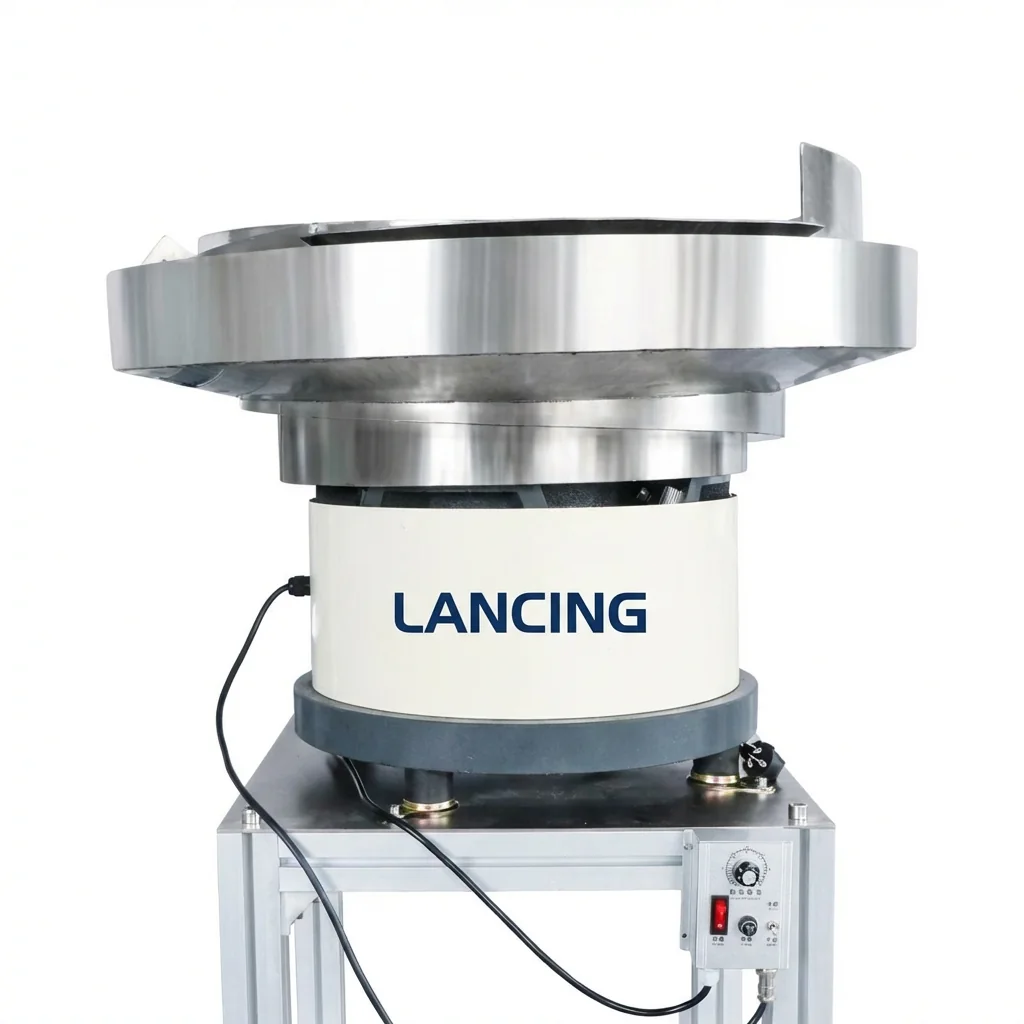
Include these details when contacting Lancing UK.
| Detail | Examples |
|---|---|
| Part samples | Caps, closures, pumps, triggers or components from the actual production batch. |
| Orientation requirement | Open side up, thread direction, pump stem direction, crown cap presentation or pick-up angle. |
| Line speed | Target parts per minute and whether there is an accumulation buffer. |
| Downstream machine | Capping machine, assembly fixture, pick-and-place cell, counting line or applicator. |
| Environment | Cleaning expectations, noise constraints, power, air and operator access. |
Use these guides to prepare a stronger enquiry and avoid common feeding issues.
Use the checklist above and send the details to Lancing UK for a practical configuration recommendation.
Explore feeding applications
Compare closure feeders, screw-cap orientation, feeder tooling and contract-packing applications to identify the configuration needed for your parts and production line.
Buyer guidance
Use the guide content to prepare samples, define acceptance criteria and avoid weak enquiries that only describe the machine name.
The sample requirements page explains what parts, drawings and variation evidence to send before a bowl feeder route is confirmed.
Sample requirementsThe design guide explains how vibration, tooling, track shape and reject points create repeatable orientation.
Design guideUse the troubleshooting route if the issue is an existing feeder that jams, double-feeds, mis-orients or loses rate.
Troubleshooting| Detail to confirm | Why Lancing needs it |
|---|---|
| Component geometry and material | The tooling, track and reject method depend on the actual cap, closure or part rather than the name of the application. |
| Required orientation and discharge height | The feeder must deliver the part in the correct attitude and at the correct mechanical interface point. |
| Target feed rate and line interface | The bowl, hopper, controller and sensors must be matched to the downstream process without over-feeding or starving it. |
| Noise, static, coating and cleaning needs | These constraints influence lining, covers, sensor selection, tooling access and maintenance planning. |
Technical resource centre
These engineering guides help buyers choose a feeding route, prepare representative trials, define controls and reduce integration risk before quotation.
Compare vibratory bowl feeders and centrifugal feeders by component geometry, orientation, output demand, changeover and downstream handover.
Compare bowl feeders and step feeders for part geometry, noise, recirculation, footprint, changeover and automated line integration.
Compare flexible feeding and vibratory bowl feeding for part variety, changeover, vision, orientation, output and robot integration.
Prepare a bowl feeder factory acceptance test covering samples, output profile, orientation, rejects, sensors, handover and documentation.
Prepare for bowl feeder installation with checks for layout, discharge height, utilities, access, controls, guarding, samples and commissioning.
Plan bowl feeder sensors, controls and PLC interfaces for demand, level, blockage, escapement, faults and downstream machine handshakes.
Guide to bowl feeder coatings, linings and contact-surface choices for noise, friction, marking, static, cleaning and component protection.
Plan bowl feeder hopper capacity and refill control around part behaviour, line demand, operator access, level sensing and changeover.
Plain-English glossary of bowl feeder, tooling, track, orientation, reject, recirculation, escapement, sensor and integration terminology.
Plan component feeding with counting or batching for kits, containers and assembly processes, including singulation, sensors, rejects and verification.
Guide to automatic fastener feeding for screws, nuts, washers and small metal components, covering geometry, orientation, tracks and handover.
Find the right answer
Start with the decision or problem you need to resolve, then move to the relevant product or enquiry route once the evidence is clear.
Use the part-suitability question page with the sample requirements and enquiry checklist. Together they cover geometry, nesting, surface condition, normal variation, orientation and the evidence needed for a representative trial before a configuration or price is treated as meaningful.
Use the discharge-interface guide and the sensors, controls and PLC integration guide. They separate mechanical handover, part release, presence confirmation, demand signals, fault states and responsibility for the final transfer between suppliers.
Begin with the feed-rate and troubleshooting guides. Record bowl loading, component batch, controller setting, reject behaviour, queue condition and downstream demand before changing tooling. A problem that appears only under load may relate to part interaction, refill control, track pressure or the receiving machine rather than the drive alone.
Use identified sample batches, an agreed demand sequence, test conditions, accepted orientation, observed rejects, sensor states, handover evidence and a record of settings. The factory acceptance test guide explains how to define the observation rather than relying on an informal demonstration.
New technical routes
These pages answer buyer questions that are too detailed for a short product card: what proof to request, how to plan footprint, when cleaning or PUWER matters, and how to support the feeder after installation.
How to interpret sample trial video evidence and avoid treating a short clip as full production proof.
View video guidanceHow discharge height, footprint, access and guarding expectations affect the final feeder route.
Plan the layoutGuides for washdown/hygiene boundaries, wear items, change parts and ongoing support evidence.
Cleaning and hygieneThese additions target practical questions found in UK feeder research: whether an existing feeder can be recovered, how bulk feed should be controlled and how specialist component sectors should prepare a brief.
Decide whether to service, re-tool, update controls or replace an existing feeder.
Open the repair guidePlan refill strategy, level sensing and controlled part supply into the bowl.
Open the bulk-feed guideLink industry, component material and application factors back to the correct feeder route.
Review plastic moulded parts