What is the most important design input?
Real production samples and a clear required exit orientation are usually the most important inputs.
Guide
Key design points to consider before asking for a vibratory bowl feeder or component orientation system quote.
Specification focus
Good bowl feeder design starts with the part. Size, material, shape, balance, finish and orientation requirement all affect the bowl diameter, track tooling, discharge method and whether extra equipment is needed.
Production samples reveal behaviour that drawings alone often miss.
The final presentation must be clear before tooling can be planned.
The feeder outlet should match the downstream machine, not just the bowl track.
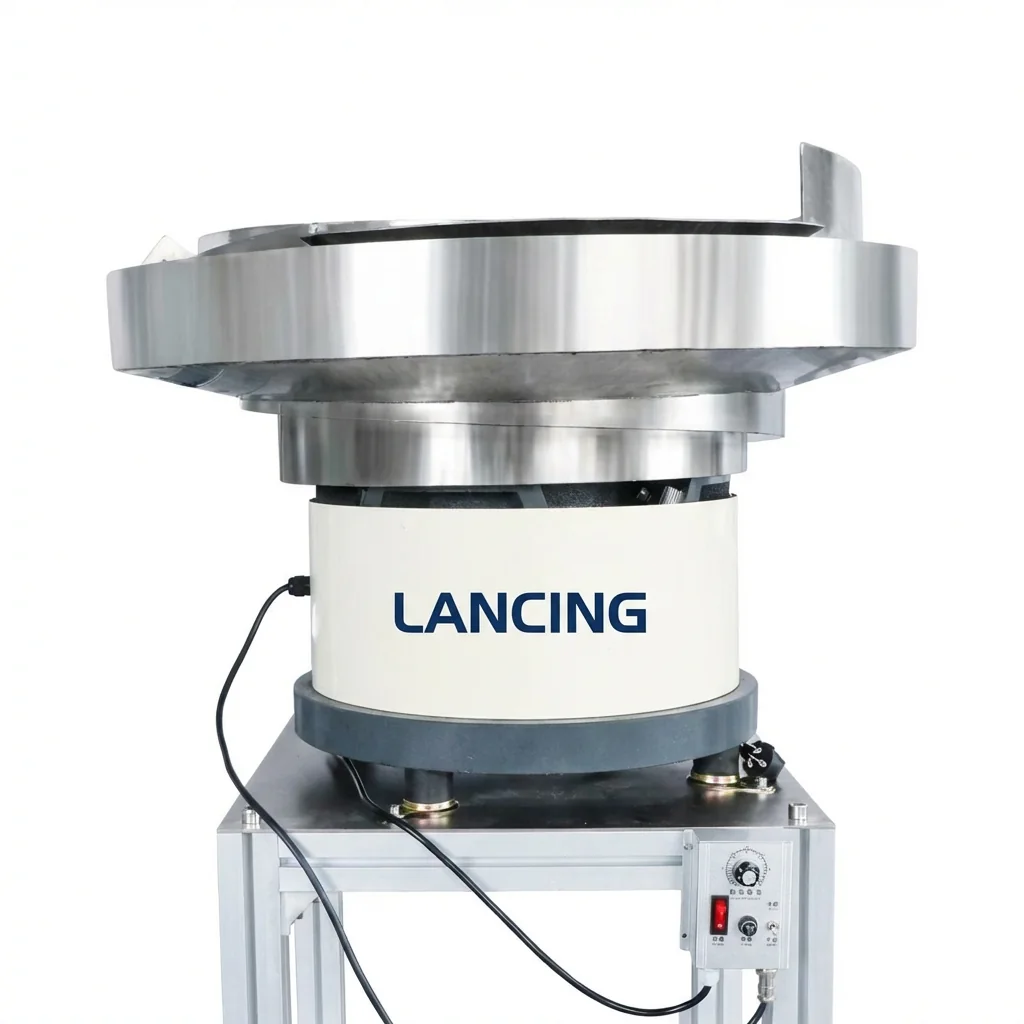
Planning details
These points help Lancing UK narrow the feeder route and avoid a generic specification.
| Area | What matters |
|---|---|
| Part data | Dimensions, weight, material, symmetry, surface finish and variation. |
| Process data | Target output, downstream equipment, required orientation and control interface. |
| Physical data | Footprint, discharge height, access, utilities and noise considerations. |
| Options to consider | Hopper, linear track, escapement, sensors, cover, stand and controls. |
Quick answers
Real production samples and a clear required exit orientation are usually the most important inputs.
Drawings help, but samples are usually needed to confirm balance, friction, nesting and feeding behaviour.
A feeder that works in isolation can still fail if the chute, height or timing does not match the receiving machine.
Use these pages to compare related feeder options and prepare a stronger quote request.
Send samples, photos, required orientation and target output to Lancing UK.
Practical acceptance criteria
This additional section focuses on tooling design, part geometry, discharge handover, recirculation and risk checks before a final design is agreed rather than repeating generic automation definitions.
| Briefing area | Evidence to collect | How it helps the feeder decision |
|---|---|---|
| Sample set | Good parts, rejected parts if available, drawings, photos, dimensions, material and finish notes. | Shows how the real component behaves in the bowl, track and reject route. |
| Required output | Target feed rate, line demand, acceptable accumulation and any stop/start sequence. | Prevents over-specifying or under-specifying the bowl, hopper and controller. |
| Orientation and handover | Required exit attitude, discharge height, downstream machine inlet, chute direction and pick point details. | Defines whether the system needs a bowl, linear track, chute, escapement or sensor confirmation. |
| Operating constraints | Noise, static, cleanability, coating, access, guarding, operator refill and maintenance expectations. | Highlights practical limitations before design, quotation and installation. |
If the requirement is a bowl, cap or component feeding project, move from the guide to the matching product route.
View productsIf the requirement starts with the cap, pump, trigger, screw cap or small component, use the application route first.
View applicationsWhen samples and line details are available, send them through the enquiry form so Lancing can assess the route.
Request a quoteSend representative components from the range the feeder must handle, including relevant dimensional and surface-finish variation. Define the required orientation and the condition in which parts must leave the feeder. A successful sample run should also record delivery consistency and any marking, damage or recirculation that matters to assembly.
Related guidance: Enquiry checklist · Bowl feeder products