Start with the closure
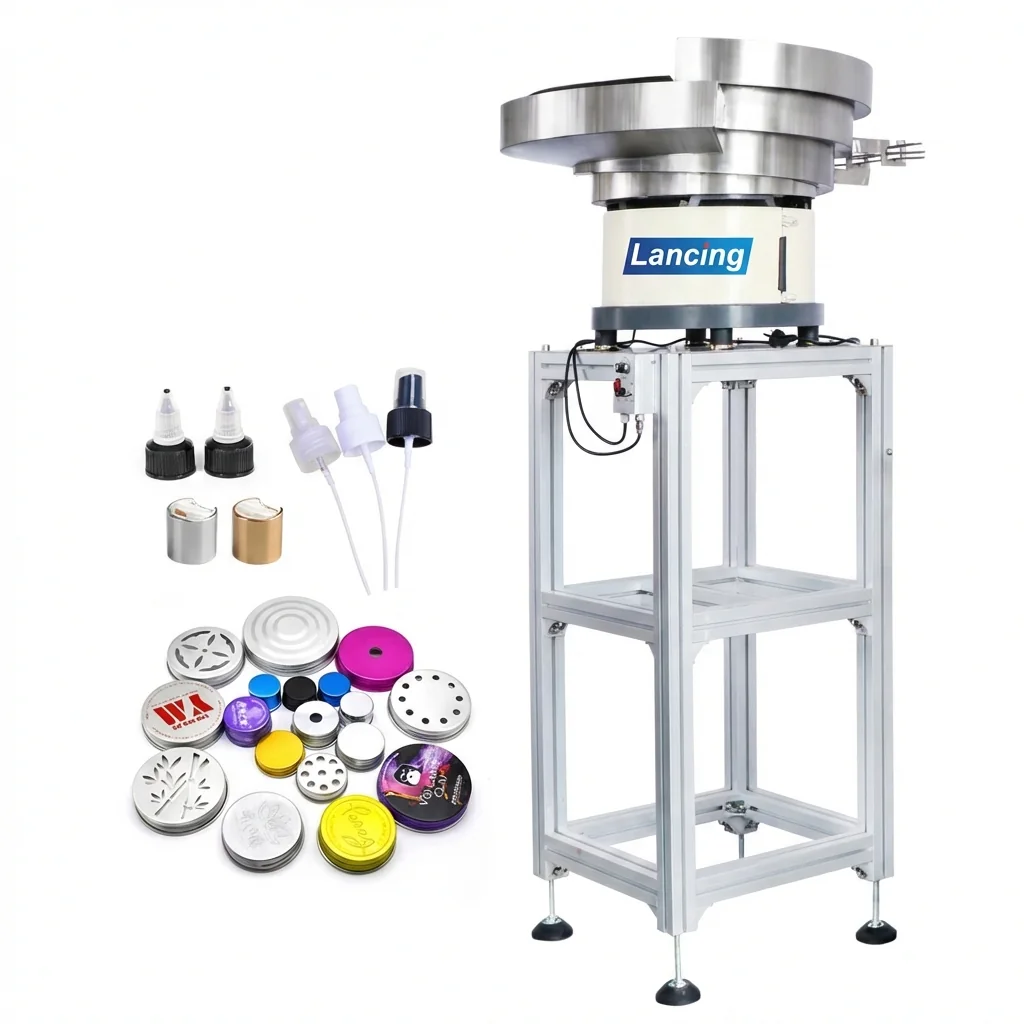
Cap diameter, height, thread, liner, finish and orientation requirement drive the bowl and tooling choice.
Guide
Choosing a cap feeder starts with the cap, the capping machine and the required output. The right brief prevents poor comparisons between different feeder designs.
Specification advice
Choosing a cap feeder starts with the cap, the capping machine and the required output. The right brief prevents poor comparisons between different feeder designs.
Important considerations
Cap diameter, height, thread, liner, finish and orientation requirement drive the bowl and tooling choice.
The feeder must deliver caps at the correct height, speed and orientation for the cap placer or capping head.
Consider hopper loading, noise, guarding, sensor feedback, cleaning access and whether the line will run multiple cap formats.
FAQ
Send cap samples, cap dimensions, photos, target caps per minute, required orientation and details of the capping machine.
Yes. They can reduce manual cap loading and help maintain a more consistent cap supply to the capping machine.
They can be, but pumps and triggers need separate assessment because they are often harder to orient than standard screw caps.
Related routes
Send Lancing UK your samples, photos, dimensions and target output for a practical feeder recommendation.
Practical acceptance criteria
This additional section focuses on cap-specific buying checks including cap geometry, downstream capping process and sample testing rather than repeating generic automation definitions.
| Briefing area | Evidence to collect | How it helps the feeder decision |
|---|---|---|
| Sample set | Good parts, rejected parts if available, drawings, photos, dimensions, material and finish notes. | Shows how the real component behaves in the bowl, track and reject route. |
| Required output | Target feed rate, line demand, acceptable accumulation and any stop/start sequence. | Prevents over-specifying or under-specifying the bowl, hopper and controller. |
| Orientation and handover | Required exit attitude, discharge height, downstream machine inlet, chute direction and pick point details. | Defines whether the system needs a bowl, linear track, chute, escapement or sensor confirmation. |
| Operating constraints | Noise, static, cleanability, coating, access, guarding, operator refill and maintenance expectations. | Highlights practical limitations before design, quotation and installation. |
If the requirement is a bowl, cap or component feeding project, move from the guide to the matching product route.
View productsIf the requirement starts with the cap, pump, trigger, screw cap or small component, use the application route first.
View applicationsWhen samples and line details are available, send them through the enquiry form so Lancing can assess the route.
Request a quote