Can a cap feeder be added to an existing capping machine?
Often yes, but the capper layout, control interface and available footprint must be reviewed.
Application
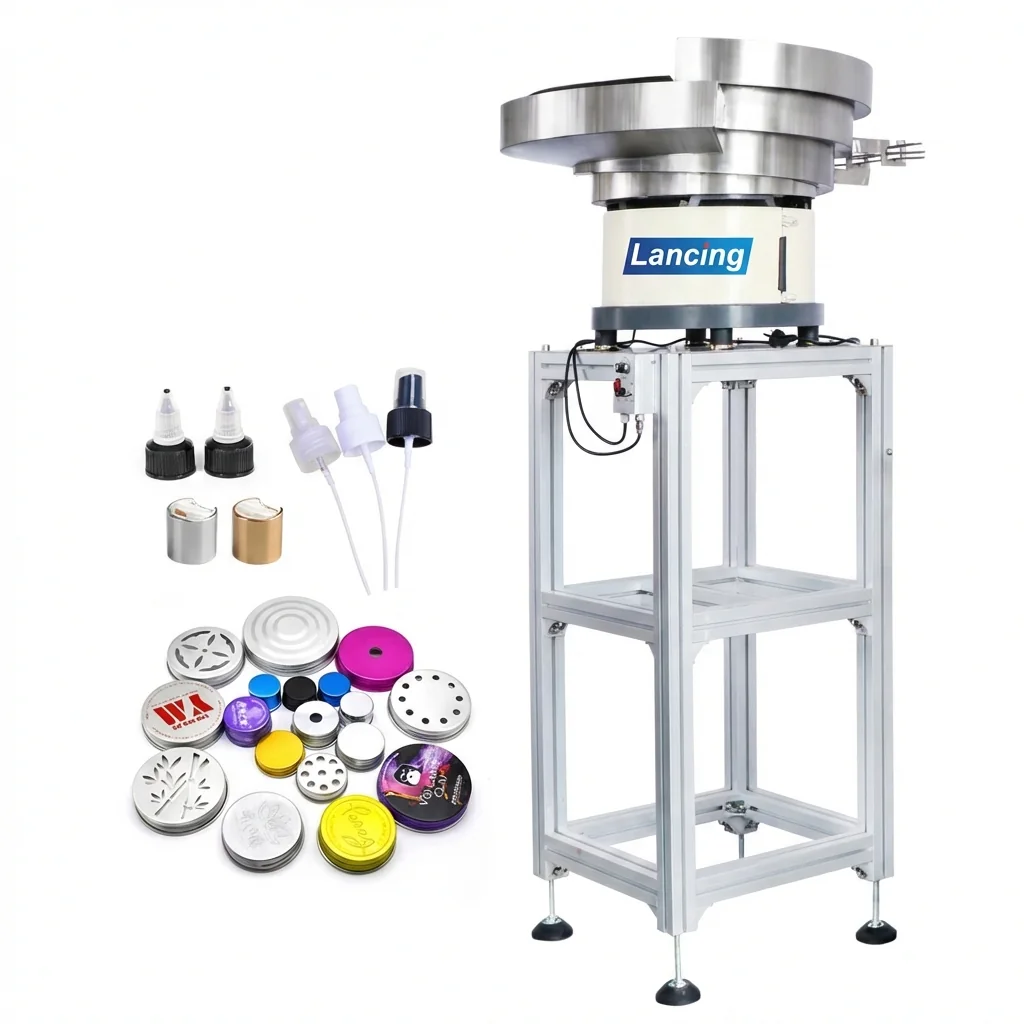
Plan how caps and closures are sorted, orientated and delivered into the capping machine without creating a bottleneck.
Specification focus
The interface between the feeder and capping machine is critical. A good feeding system must maintain enough caps in the queue, avoid jams at transfer points and respond to the demand of the capper.
Sensors can help maintain a controlled queue of caps without overfeeding the chute.
Discharge height, chute angle and access are matched to the capping machine layout.
Start/stop signals can help the feeder run in step with the packaging line.
Planning details
These points help Lancing UK narrow the feeder route and avoid a generic specification.
| Area | What matters |
|---|---|
| Typical equipment | Bowl feeder, cap hopper, chute, linear track, escapement, level sensor and controller. |
| Needed from buyer | Cap samples, capper model, line speed, layout photos and available space. |
| Common problems | Caps bridging, caps arriving upside down, chute jams and poor queue control. |
| Planning benefit | Better uptime at the point where caps transfer into the capping process. |
Quick answers
Often yes, but the capper layout, control interface and available footprint must be reviewed.
Cap shape, chute angle, friction, static, poor queue control or incorrect orientation can all contribute.
Yes. Model details, photos and drawings help specify a compatible handover route.
Use these pages to compare related feeder options and prepare a stronger quote request.
Send samples, photos, required orientation and target output to Lancing UK.
Application detail
This application is owned by the feeding and orientation problem: the component must arrive at the next machine in the right attitude, at the right height and under control.
Confirm capper inlet height, chute angle, bowl demand signal, cap backlog and starve/flood avoidance. Photographs help, but real samples are normally the deciding evidence for tooling and orientation.
Sample requirementsThe application may need a bowl, linear track, hopper, chute, escapement, sensor or a combination of these parts rather than a single generic machine.
Product routesWhere the main buying decision is the capping machine or wider packaging line, keep this site focused on feeding and use the broader Lancing machinery routes for the rest of the line.
Lancing capping machinery| Application risk | What to check before quoting |
|---|---|
| Wrong orientation | Define the acceptable exit attitude and the reject/recirculation approach for parts that do not present correctly. |
| Jam or bridge points | Review track loading, part nesting, cap edge detail, static and the handover into the chute or pick point. |
| Output mismatch | Agree whether the feeder must buffer, stop/start or be controlled by the downstream machine. |
| Change-part limits | List every part family expected to run so tooling and changeover can be scoped without unsupported assumptions. |