Can tablets and capsules be fed with a bowl feeder?
Some products may be suitable, but product fragility, hygiene requirements and downstream counting accuracy must be reviewed.
Application
Feeding considerations for small tablets, capsules and similar lightweight products that need controlled flow into downstream equipment.
Specification focus
Small pharmaceutical and nutraceutical items can require careful control because product damage, dust, static and counting accuracy may matter. Feeder suitability depends on the product, hygiene requirements and the equipment receiving the product.
Fragile or dusty products need a feeding route that reduces avoidable damage.
Flow must be matched to the receiving counter, filler or packaging machine.
Product samples and site requirements are needed before suitability can be assessed.
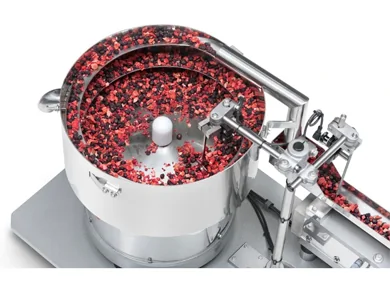
Planning details
These points help Lancing UK narrow the feeder route and avoid a generic specification.
| Area | What matters |
|---|---|
| Relevant products | Tablets, capsules, small lozenges and similar lightweight items. |
| Important checks | Fragility, dust, static, hygiene, required output and downstream machine interface. |
| Common concerns | Product marking, breakage, inconsistent flow and cleaning access. |
| Planning details | Container type, machine type, output target and cleaning requirements. |
Quick answers
Some products may be suitable, but product fragility, hygiene requirements and downstream counting accuracy must be reviewed.
Send product samples, target output, receiving machine details and any cleaning or material requirements.
Yes. The feeder route should reduce breakage, marking and excessive product agitation where possible.
Use these pages to compare related feeder options and prepare a stronger quote request.
Send samples, photos, required orientation and target output to Lancing UK.
Application detail
This application is owned by the feeding and orientation problem: the component must arrive at the next machine in the right attitude, at the right height and under control.
Confirm product fragility, dust, hygiene expectations, recirculation limits and whether a different feeding principle is more suitable. Photographs help, but real samples are normally the deciding evidence for tooling and orientation.
Sample requirementsThe application may need a bowl, linear track, hopper, chute, escapement, sensor or a combination of these parts rather than a single generic machine.
Product routesWhere the main buying decision is the capping machine or wider packaging line, keep this site focused on feeding and use the broader Lancing machinery routes for the rest of the line.
Lancing capping machinery| Application risk | What to check before quoting |
|---|---|
| Wrong orientation | Define the acceptable exit attitude and the reject/recirculation approach for parts that do not present correctly. |
| Jam or bridge points | Review track loading, part nesting, cap edge detail, static and the handover into the chute or pick point. |
| Output mismatch | Agree whether the feeder must buffer, stop/start or be controlled by the downstream machine. |
| Change-part limits | List every part family expected to run so tooling and changeover can be scoped without unsupported assumptions. |