Can feeders be used in pharmaceutical packaging?
They can be used where the specification, materials, cleaning access and validation expectations are suitable for the project.
Industry route
Feeding and orientation systems for packaging projects with caps, closures, tablets, capsules and small components.
Specification focus
Pharmaceutical and nutraceutical projects often require careful discussion around product handling, cleaning, documentation, cap presentation and line reliability. The correct feeder route depends on both the component and the downstream machinery.
Caps, closures, tablets, capsules and inserts are assessed around handling and orientation requirements.
Feeders can help reduce manual placement and improve consistency into packaging equipment.
Cleaning access, operator access and integration details are considered during quotation.
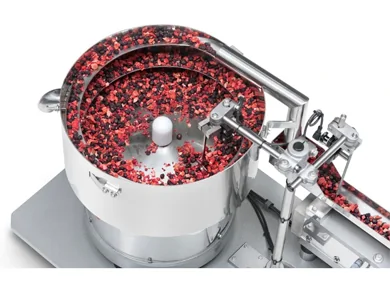
Planning details
These points help Lancing UK narrow the feeder route and avoid a generic specification.
| Area | What matters |
|---|---|
| Common projects | Cap feeding, closure orientation, tablet or capsule flow, insert feeding and component presentation. |
| Key details | Samples, target output, cleaning requirements, downstream machine type and available space. |
| Potential options | Bowl feeder, hopper, linear track, sensors, chute, escapement and custom stand. |
| Best first step | Send production samples and explain the full packaging or assembly process. |
Quick answers
They can be used where the specification, materials, cleaning access and validation expectations are suitable for the project.
Yes. Samples help check flow, orientation, fragility and handover into the next machine.
Yes, cap, closure and some product feeding applications can be assessed for nutraceutical packaging lines.
Use these pages to compare related feeder options and prepare a stronger quote request.
Send samples, photos, required orientation and target output to Lancing UK.
Industry specification
This page should help buyers describe the feeding problem clearly while keeping complete packaging-line, filling or capping decisions on the right Lancing routes.
The bowl feeder owns careful handling, repeatable presentation, sample approval and documentation of the agreed settings. It should not be treated as a generic machine purchase without the part samples and downstream interface.
Component feeding systemsSend samples, part dimensions, target rate, required orientation, discharge height, line layout, available footprint and utility/control requirements.
Enquiry checklistAvoid assuming a feeder will handle every future format. Different caps, pumps, closures or small parts can need different tooling, rails or discharge parts.
Changeover guide| Industry constraint | Feeder design response |
|---|---|
| Noise and operator access | Consider acoustic covers, realistic bowl speed, refill height and safe access to clean or clear the track. |
| Static, coating and marking | Discuss plastic behaviour, surface finish, part marking risk and whether lining or special contact surfaces are required. |
| Cleanliness and washdown expectations | State any hygiene, cleaning or environment expectations so unsupported cleanroom or food-grade assumptions are not made. |
| Jam detection and controls | Confirm the sensor, full-track, low-level and PLC-interface expectations for the line. |