Does every bowl feeder need a hopper?
No. Smaller or low-volume lines may not need one, but hoppers are useful when manual refilling becomes a bottleneck.
Product route
Bulk hopper options for cap feeders and vibratory bowls where longer running and reduced manual topping-up are required.
Specification focus
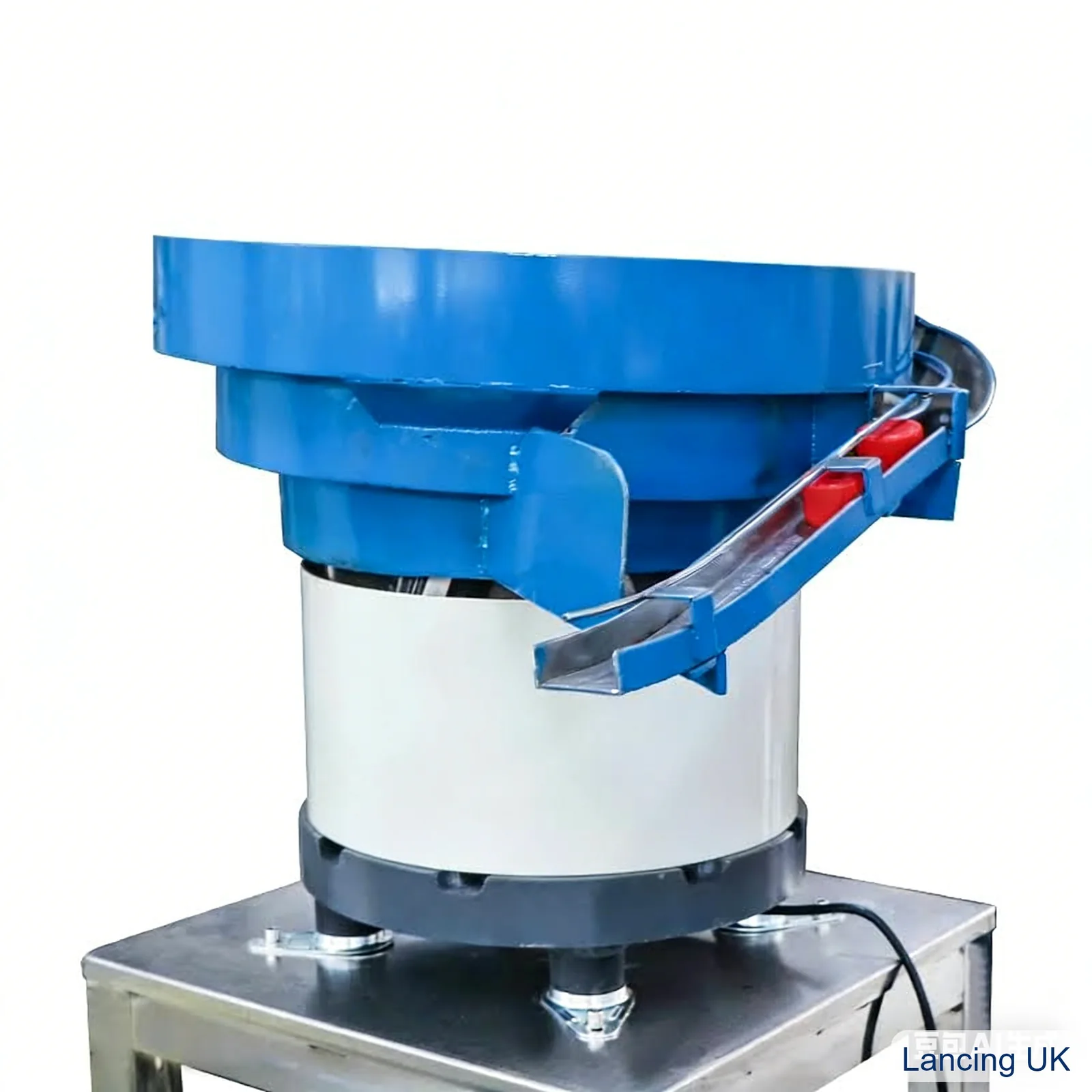
A hopper helps maintain a more consistent level of parts in the bowl. It is useful where operators would otherwise need to keep manually refilling caps, closures or small parts during production.
Caps or components can be loaded into a hopper above or beside the bowl feeder.
Sensors can help maintain a controlled bowl level and avoid overloading the track.
A correctly sized hopper can improve line consistency and reduce repeated manual refilling.
Planning details
These points help Lancing UK narrow the feeder route and avoid a generic specification.
| Area | What matters |
|---|---|
| Used with | Cap feeders, closure feeders, vibratory bowl feeders and component orientation systems. |
| Key details | Part size, bulk behaviour, hopper height, refill method and operator access. |
| Options | Level sensor, elevator, chute, guarding, low-level warning and integrated controller. |
| Benefit | Longer running between top-ups and more stable bowl loading conditions. |
Quick answers
No. Smaller or low-volume lines may not need one, but hoppers are useful when manual refilling becomes a bottleneck.
A properly controlled hopper should feed the bowl gradually rather than flood the track.
Part size, target output, refill interval, available height and operator access all help with sizing.
Use these pages to compare related feeder options and prepare a stronger quote request.
Send samples, photos, required orientation and target output to Lancing UK.
Engineering specification
These notes add the practical information buyers usually need before Lancing can confirm a feeder route, tooling approach and line interface.
Cap feeder hoppers should be assessed with real samples. Lancing will need the component geometry, material, finish, centre of gravity and the exact orientation needed at the discharge point.
View sample requirementsThe design route considers hopper capacity, refill ergonomics, level sensors, cap bridging and operator access. Wrongly presented parts may need to be rejected, corrected or recirculated before they reach the downstream equipment.
View tooling guideThe discharge height, chute handover, sensor positions, start/stop signal and PLC interface should be checked before the quotation is finalised.
Integration checklist| Feeder planning point | What to confirm | Why it matters |
|---|---|---|
| Suitable parts | Bulk caps and closures that need controlled refill into a bowl feeder | Confirms that this page owns the orientation and feeding problem rather than the complete packaging machine decision. |
| Target rate | Target parts per minute, acceptable surge and whether the feeder must avoid starving or flooding the downstream machine. | The rate is part-specific and should be proven against the actual component and discharge route. |
| Change parts | Which caps, closures or components must run on the same system and how quickly changeover needs to happen. | Some formats can share tooling; others need dedicated bowls, tracks, rails or chutes. |
| Environment | Noise constraints, static risk, product cleanliness, material finish, coating and operator access. | These factors influence bowl lining, covers, sensor selection, guarding and maintenance access. |
These answers are based on the feeder information visible on this site and avoid unsupported speed, price or stock claims.
The useful starting point is sample parts, drawings or dimensions, material, weight, required exit orientation, target feed rate, downstream machine details, discharge height, footprint and any control interface requirements.
Sometimes, but it depends on how close the parts are in size, weight, shape and orientation behaviour. Multi-format use should be checked with real samples and agreed changeover limits.
Geometry, surface finish, weight, nesting behaviour, static, tooling wear, track loading, sensor position, chute handover and the downstream machine demand can all affect consistency.
If the component tangles, marks easily, has no stable orientation features or needs a very different presentation method, a linear feeder, escapement, hopper, magazine or another handling route may be better.
Agree whether the feeder must start and stop from the downstream machine, whether level sensors are required and whether a sensor or PLC interface is needed for jam, full-track or low-part conditions.
The bowl tooling and reject route are designed around the actual part. Samples expose mould variation, coating, static, balance and change-part issues that drawings alone can miss.
Use the bulk-feed guide to decide how refill frequency, bowl level, level sensors and operator access affect the cap feeder specification.