Can a bowl feeder supply a robot?
Yes, when the final presentation point is designed around the robot gripper, cycle time and part orientation.
Application
Feed and present small components so a machine, fixture or operator can pick them consistently.
Specification focus
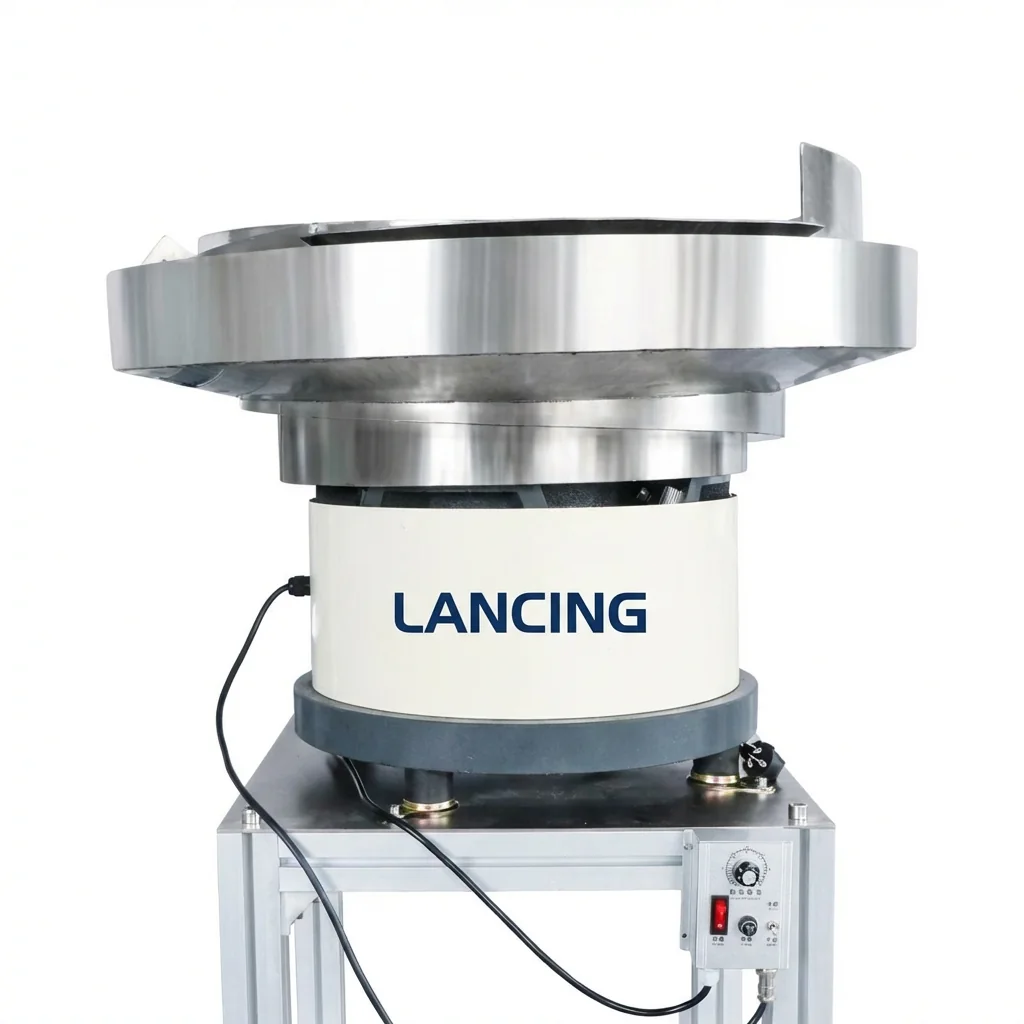
Pick-and-place systems need components to arrive in a repeatable position. A bowl feeder, linear track and escapement can help present parts in a controlled queue rather than requiring manual sorting or loose part handling.
Parts are controlled so grippers, nests or operators can access them consistently.
Escapements can separate parts and present one item at a time if required.
Suitable for fixtures, inspection stations, packing lines and automated assembly cells.
Planning details
These points help Lancing UK narrow the feeder route and avoid a generic specification.
| Area | What matters |
|---|---|
| Used for | Small components, clips, inserts, caps, plugs, hardware and orientation-sensitive parts. |
| Integration data | Robot/pick point position, cycle time, grip method, part orientation and sensor needs. |
| Possible equipment | Bowl feeder, linear track, escapement, nest, sensor and controller. |
| Key objective | Stable presentation at the handover point rather than simply moving parts in bulk. |
Quick answers
Yes, when the final presentation point is designed around the robot gripper, cycle time and part orientation.
Singulation separates parts so one component is presented at a time rather than a queue of overlapping items.
Drawings or photos help confirm discharge height, access and the pick position.
Use these pages to compare related feeder options and prepare a stronger quote request.
Send samples, photos, required orientation and target output to Lancing UK.
Application detail
This application is owned by the feeding and orientation problem: the component must arrive at the next machine in the right attitude, at the right height and under control.
Confirm pick face, nest position, part release, escapement timing and sensor confirmation. Photographs help, but real samples are normally the deciding evidence for tooling and orientation.
Sample requirementsThe application may need a bowl, linear track, hopper, chute, escapement, sensor or a combination of these parts rather than a single generic machine.
Product routesWhere the main buying decision is the capping machine or wider packaging line, keep this site focused on feeding and use the broader Lancing machinery routes for the rest of the line.
Lancing capping machinery| Application risk | What to check before quoting |
|---|---|
| Wrong orientation | Define the acceptable exit attitude and the reject/recirculation approach for parts that do not present correctly. |
| Jam or bridge points | Review track loading, part nesting, cap edge detail, static and the handover into the chute or pick point. |
| Output mismatch | Agree whether the feeder must buffer, stop/start or be controlled by the downstream machine. |
| Change-part limits | List every part family expected to run so tooling and changeover can be scoped without unsupported assumptions. |
Robot handover
The feeder, final nest and robot gripper must share one clear datum, one accepted orientation and one unambiguous occupied state.
The gripper needs access to the intended contact surfaces without interference from rails, guides, sensors or neighbouring parts. Those surfaces, the approach direction and any tolerance for part movement should be identified before the final nest or escapement is designed.
An escapement, stop, nest or controlled track feature can isolate the leading part while retaining the queue behind it. The mechanism must suit the component, robot cycle and available space, and it should confirm that the pick position is occupied before the robot attempts collection.
The control sequence should preserve or safely re-establish a known pick state rather than continuing to feed blindly. The required response depends on whether the part remains in position, moves, falls or blocks the next part, so missed-pick detection and recovery should be agreed with the robot integrator.
The robot programme, gripper, feeder nest and sensor positions all depend on the same physical reference. Agreeing the datum early prevents late changes to the track or frame and makes it clear which supplier controls part position, release and confirmation at the pick point.