Commercial route
If the requirement is a bowl, cap or component feeding project, move from the guide to the matching product route.
View productsBowl feeder selection
Common causes of bowl feeder feeding problems and the checks to make before replacing or reworking a system.
Vibratory bowl feeders can usually be tuned to deliver reliable feeding, but problems appear when the component, tooling, vibration setting or downstream control are not matched. This guide explains the common symptoms and the checks that help identify the cause.
Use it for early troubleshooting or when planning a replacement, upgrade or new feeder for an existing packaging or assembly line.
| Problem | Possible cause | What to check |
|---|---|---|
| Parts fail to climb the track | Vibration setting, bowl loading or unsuitable track profile. | Check bowl fill level, controller setting and whether parts are damaged or inconsistent. |
| Incorrect orientation reaches discharge | Reject tooling not suited to the part or part variation outside tolerance. | Review samples and the required final orientation. |
| Feeder starves the capper | Feed rate below line requirement or poor control of the transfer point. | Confirm caps per minute and sensor/track operation. |
| Parts jam or bridge | Nesting, high friction, static or too much product in the bowl. | Reduce bulk load, inspect part shape and assess surface finish. |
| Inconsistent output | Controller settings, worn tooling, variable parts or downstream back pressure. | Check both feeder and downstream machine rather than the bowl alone. |
Upgrade route
A feeder can be affected by chute design, capper timing, overfilled tracks, missing sensors, poor escapement control or insufficient space. A proper review looks at the whole handover into the next machine.
Lancing UK can help assess whether the route needs tuning, replacement tooling, added controls or a new feeder design.
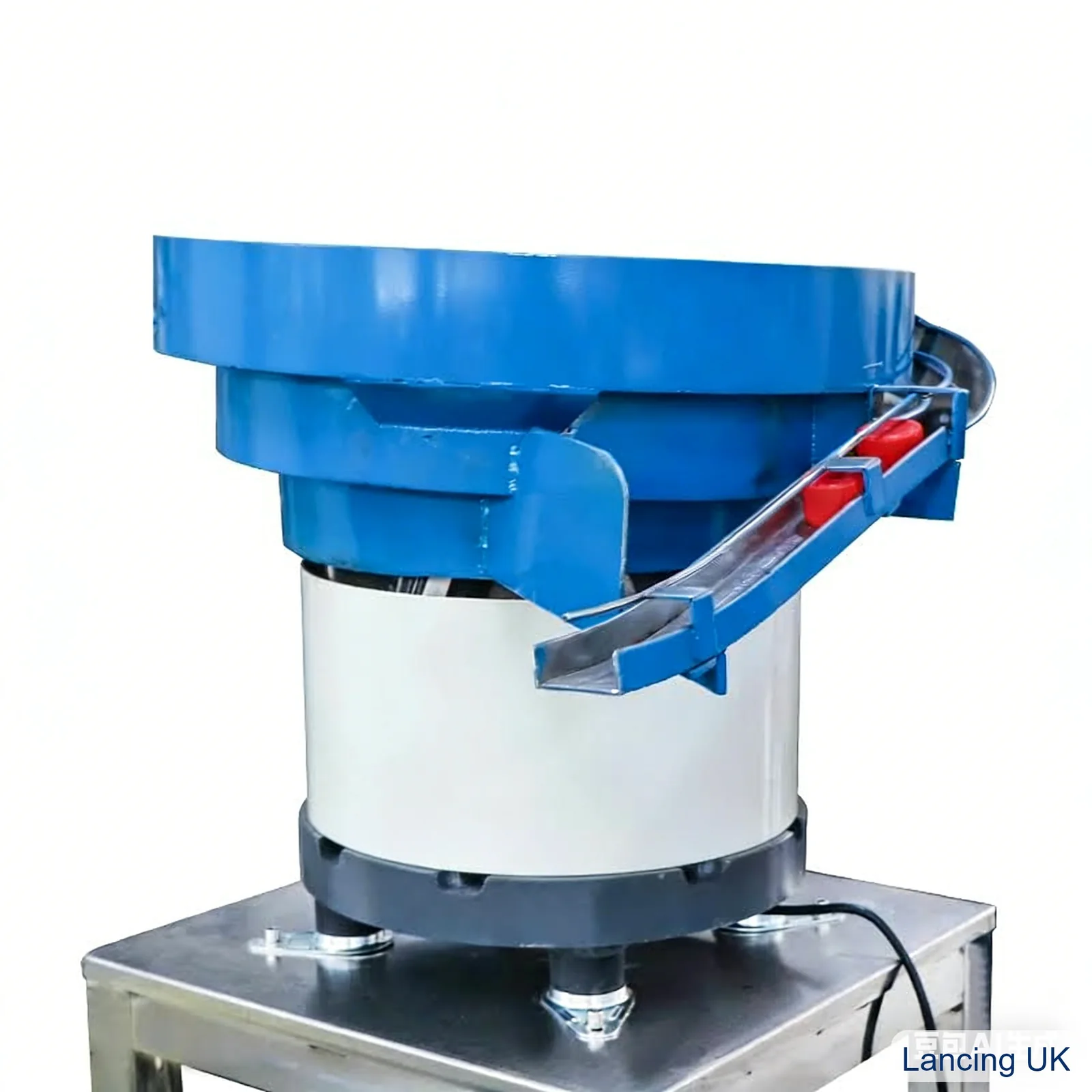
Send photos, video and the part details so the issue can be reviewed.
Practical acceptance criteria
This additional section focuses on failure modes such as jams, inconsistent feed, changed components, tooling wear and sensor misalignment rather than repeating generic automation definitions.
| Briefing area | Evidence to collect | How it helps the feeder decision |
|---|---|---|
| Sample set | Good parts, rejected parts if available, drawings, photos, dimensions, material and finish notes. | Shows how the real component behaves in the bowl, track and reject route. |
| Required output | Target feed rate, line demand, acceptable accumulation and any stop/start sequence. | Prevents over-specifying or under-specifying the bowl, hopper and controller. |
| Orientation and handover | Required exit attitude, discharge height, downstream machine inlet, chute direction and pick point details. | Defines whether the system needs a bowl, linear track, chute, escapement or sensor confirmation. |
| Operating constraints | Noise, static, cleanability, coating, access, guarding, operator refill and maintenance expectations. | Highlights practical limitations before design, quotation and installation. |
If the requirement is a bowl, cap or component feeding project, move from the guide to the matching product route.
View productsIf the requirement starts with the cap, pump, trigger, screw cap or small component, use the application route first.
View applicationsWhen samples and line details are available, send them through the enquiry form so Lancing can assess the route.
Request a quoteDiagnostic questions
A reliable diagnosis starts with controlled observations of parts, loading, tooling, settings and downstream demand rather than an immediate increase in vibration.
More vibration can make parts bounce, overlap, leave their stable attitude or arrive at reject tooling too quickly to be controlled. The raw movement may look faster while the number of correctly oriented parts at discharge falls. Any adjustment should be checked at the handover under representative loading.
Too many parts can increase collisions, stacking and pressure at the track entrance; too few can change the flow and refill pattern. A hopper and level control should maintain a suitable operating range, but the correct range has to be established with the real component and bowl design.
Record the part batch, bowl level, controller setting, location of the fault, rejected attitudes, sensor state, downstream demand and a short video where safe. This creates a before-and-after reference and helps distinguish a tooling issue from contamination, component variation, alignment or control logic.
Stop and arrange competent inspection where there is unsafe access, damaged guarding, unusual heat or noise, loose tooling, electrical or control faults, repeated part damage or an unpredictable release at the machine interface. Operators should not reach into running equipment or defeat safety controls to clear a recurring problem.
If the feeder used to work but now jams, slows, marks parts or no longer matches the component, review the repair, refurbishment and upgrade route before assuming a new system is required.